People of Biomedial MR
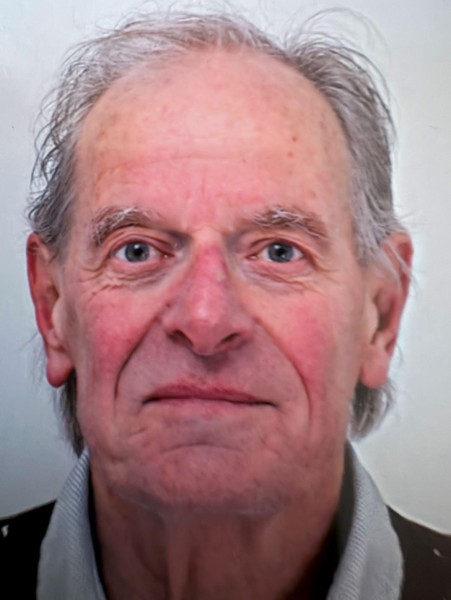
Emeritus professor, Dr. Arend Heerschap
My main research interest is the exploitation of the exquisite non-invasive capabilities of magnetic resonance (MR) in “molecular” and “biological” imaging to address biomedical questions and problems with the aim to better understand disease processes and to improve diagnostics and treatment evaluation in clinical examinations. I participated with MR in translational research, concerning complementary animal and human studies, focusing on oncology and energy metabolism mainly applied to prostate, brain, liver and skeletal muscle.
In this research novel techniques of water (1H) signal imaging (MRI) were developed and implemented to study the anatomy, morphology and physiology of body organs.
I have special interest in MR spectroscopy (MRS) or spectroscopic imaging (MRSI) which monitors MR sensitive nuclei (e.g. 1H, 31P) in metabolites in the body. This is the only technique to assess metabolite levels non-invasively and more importantly to assess metabolic conversions (metabolism in real time). It includes substrate labeling with non-radioactive nuclei such as 2H, 13C and 19F. Because the tissue concentration of metabolites is far less than that of body water their signal-to-noise is much lower and therefore MRS(I) applications are more challenging than those of MRI. However, MRS(I) provides valuable information on (active) metabolism that is different from the more anatomical data provided by MRI. Often changes in metabolism occur earlier in disease progression than changes seen by MRI which rather more reflect end-stages of disease.
It is common to combine MRS(I) with MRI acquisitions to obtain multi-parametric data sets.